Polypropylene (PP) is an extremely versatile technical polymer and one of the most widely used plastics in the industrial world. Valued for its lightness, its incredible fatigue resistance (flexion) and its ability to be sterilised, it is indispensable in sectors as demanding as medical, automotive or chemical plastic fabrication.
PP, versatility built to last
- Comprehensive support, from design to industrialization
- Detailed identification of your technical needs
- Advice on the choice of the most suitable technologies
What is PP (polypropylene) plastic?
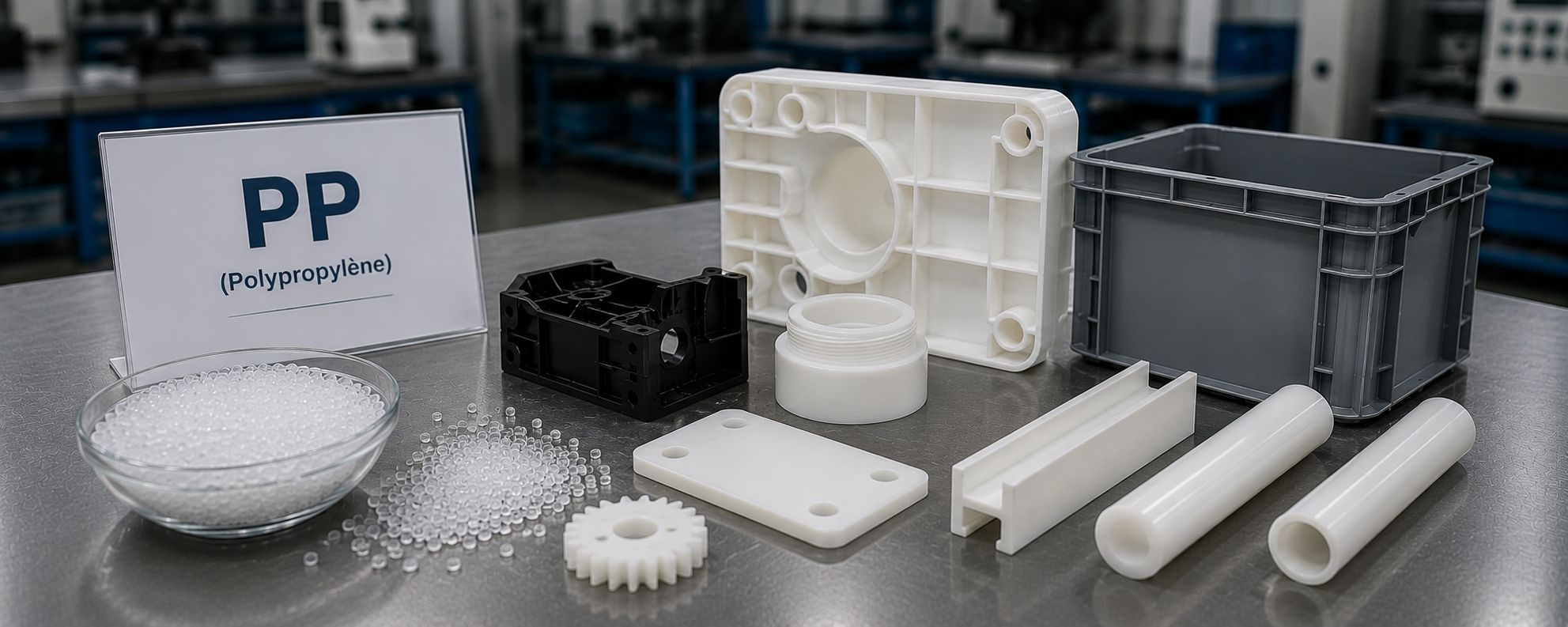
Polypropylene (PP) is a semi-crystalline thermoplastic polymer from the polyolefin family (like HDPE). It stands out for its very low density, making it one of the lightest plastics on the market. Industrially, it is generally processed in two main forms to meet mechanical requirements:
- PP Homopolymer (PPH): very rigid, it offers excellent heat resistance and very good chemical resistance, but remains sensitive to impact at low temperatures.
- PP Copolymer (PPC): modified by the addition of ethylene, it gains considerably in flexibility and impact resistance, even in cold environments.
The main properties and advantages of PP
Polypropylene is a true Swiss army knife for design offices, combining particularly sought-after technical characteristics:
- Exceptional fatigue resistance: it is the king material for producing "living hinges". PP can be bent millions of times at the same point without ever breaking.
- Very good thermal resistance: unlike HDPE, PP retains its shape and mechanical properties at high temperatures (up to 100 °C to 120 °C continuously), allowing it to withstand steam sterilisation cycles or boiling water.
- Total chemical inertness: it is unaffected by the vast majority of solvents, acids, bases and greases, and is completely unaffected by moisture (totally hydrophobic).
- Insulation properties: PP is an excellent electrical insulator, often used for the protection of live components.
The limitations of PP: which applications should it be avoided for?
Our expertise involves directing you towards the right material by anticipating its weak points:
- Brittleness at low temperatures (for PPH): standard PP (Homopolymer) becomes brittle below 0 °C. For refrigeration or outdoor winter applications, we will automatically switch to PP Copolymer.
- Complex industrial bonding: like all polyolefins, its low surface energy makes it "non-stick". Adhesives do not bond to it durably.
- UV sensitivity: without specific additives, PP degrades, whitens and loses its mechanical properties if exposed to sunlight for extended periods.
How does Plastisart process polypropylene?
PP's behaviour, particularly its shrinkage on cooling, requires extensive technical experience. We work with it daily through several processes:
- Plastic fabrication and welding: this is the assembly method of choice for PP. We carry out hot air or extrusion welds to produce chemical tanks, vats or pipework guaranteeing absolute tightness and heat resistance.
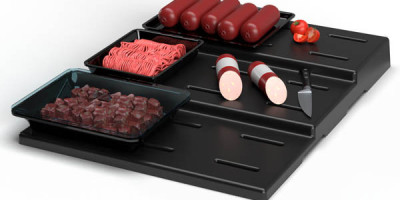
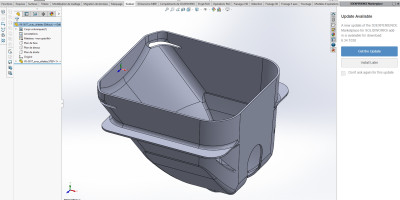
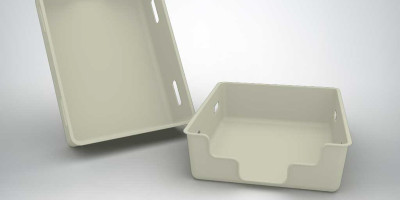
- Thermoforming: PP thermoforms very well to create trays, covers or tanks. Our design office precisely calculates material shrinkage (which can be significant) when designing moulds to guarantee the accuracy of your dimensions.
- CNC machining: we machine PP by milling and turning to produce mechanical parts (flanges, fittings, pump bodies) with excellent surface finish, adapting our tools to avoid chip melting.
Industry sectors and typical industrial applications
Thanks to its lightness, sterilisability and inertness, PP is omnipresent in advanced sectors:
- Autoclave-sterilisable surgical trays, medical equipment housings, laboratory tanks
- Storage reservoirs for hot or aggressive fluids, industrial pipework, electroplating vats
- Interior cladding parts, battery trays, ventilation housings
- Reusable food containers, machine parts in contact with food or greases
Industrial sector
Reservoirs for hot or aggressive fluids, industrial pipework and electroplating vats in welded PP resistant to heat.
Medical & pharmaceutical sector
Autoclave-sterilisable surgical trays, medical equipment housings and laboratory tanks in certified PP.
Aerospace & defence sector
Lightweight and insulating parts in PP for embedded equipment subject to weight and chemical resistance constraints.
Transport & mobility sector
Interior cladding parts, battery trays and ventilation housings in PP for special vehicles and automotive.
Food processing sector
Reusable food containers, food-contact machine parts and components certified free from BPA and phthalates.
Communication & events sector
Lightweight structures and display supports in PP for event installations requiring a resistant and recyclable material.
Cosmetics sector
Formulation vats and containers in PP for cosmetic products requiring total chemical inertness without migration.
Office sector
Insulating parts and protective housings for electrical office equipment thanks to the dielectric properties of PP.
Building & construction sector
Industrial pipework, retention tanks and connection parts in PP resistant to hot fluids and chemical agents.
Energy & environment sector
Chemical treatment tanks, storage reservoirs for aggressive fluids and filtration components in UV-stabilised PP.
Sports & leisure sector
Lightweight and fatigue-resistant equipment in PP Copolymer for sports articles and outdoor equipment.
Why choose Plastisart for your PP parts?
Processing polypropylene requires appropriate equipment and a genuine polyolefin culture. Whether you need a fabricated tank capable of withstanding an acid at 90 °C or machined parts for the medical sector, Plastisart masters the entire chain. We never use ineffective adhesives on PP: our teams are certified in plastic welding to guarantee structural assemblies of absolute reliability.
FAQ about polypropylene (PP)
What is the difference between PP (Polypropylene) and HDPE (High-Density Polyethylene)?
These two polyolefins are very similar (both lightweight, chemically resistant and impossible to bond with adhesives). The choice comes down to two criteria: heat and cold. If your part needs to withstand temperatures close to 100 °C or be sterilised, choose PP. If it needs to withstand intense impacts in a very cold environment (cold room, outdoor use in winter), HDPE is the clear winner.
Is polypropylene safe for food contact?
Yes, in its pure state, PP is totally inert, odourless, non-toxic and contains neither Bisphenol A (BPA) nor phthalates. The PP grades we select for the food processing sector strictly comply with European standards and FDA regulations regarding direct contact with foodstuffs.
Can a polypropylene part be painted or marked?
This is a delicate operation due to the "non-stick" nature of the material. For paint or ink to adhere to PP, the surface must first undergo a specific preparation treatment (Corona treatment, flame treatment or application of a very powerful chemical bonding primer) before the coating operation.