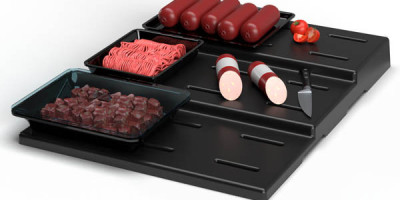
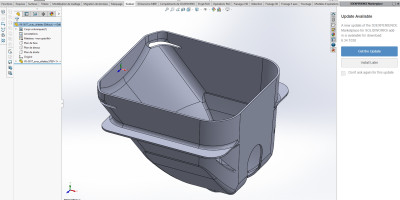
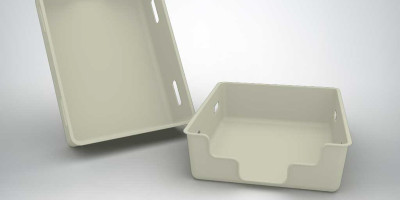
HDPE is an essential industrial polymer, renowned for its robustness, lightness and exceptional chemical inertness. Whether for plastic fabrication, retention tanks or friction parts, it offers remarkable durability even in the most aggressive environments or those subject to strict regulations.
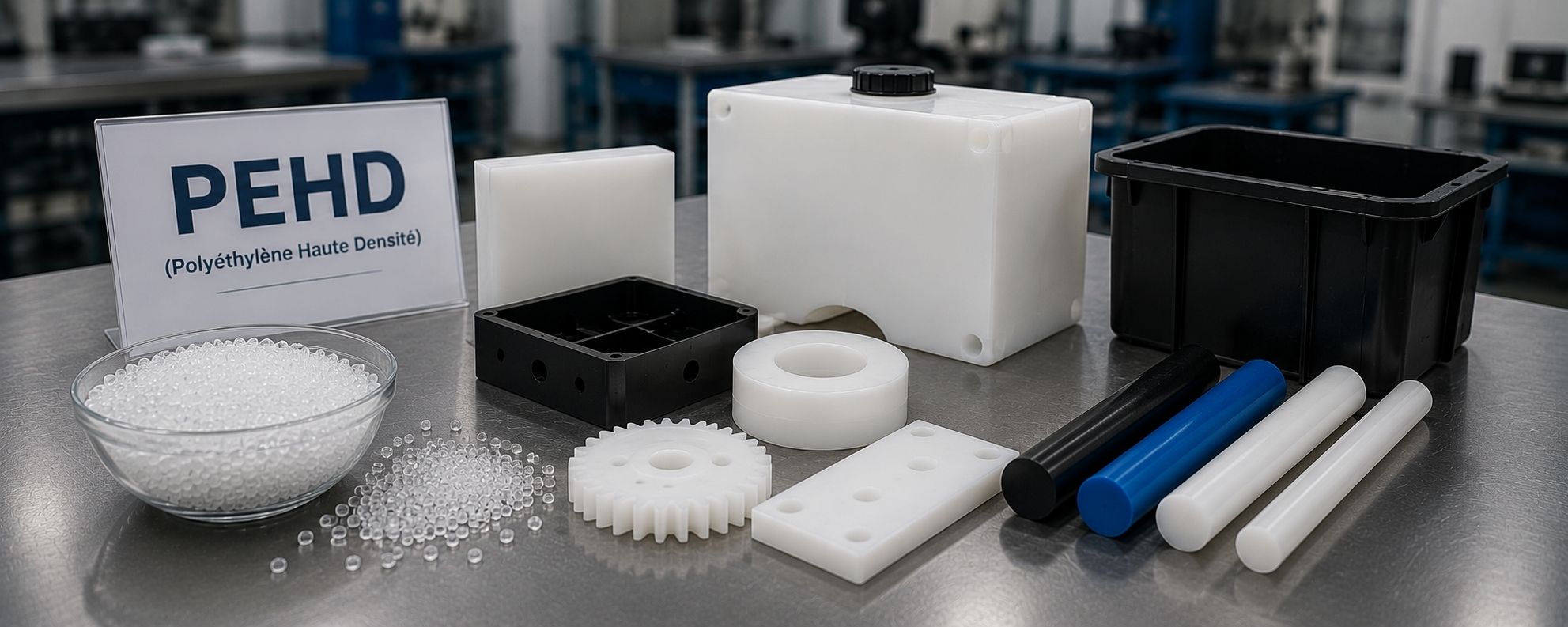
HDPE, robustness that stands the test of time
- Comprehensive support, from design to industrialization
- Detailed identification of your technical needs
- Advice on the choice of the most suitable technologies
What is HDPE plastic?
High-density polyethylene (HDPE) belongs to the large family of polyolefins. It is a semi-crystalline polymer derived from the polymerisation of ethylene. Its very linear and lightly branched molecular structure gives it a high density (compared to its cousin, LDPE). This density translates into excellent rigidity, high break resistance and a naturally "waxy" surface feel, ideal for sliding applications.
The main properties and advantages of HDPE
HDPE is a first-choice material for industrials thanks to its very specific properties and formidable performance-to-price ratio:
- Chemical and environmental properties: this is its greatest strength. HDPE offers near-absolute chemical inertness. It resists the most corrosive environments, most acids, bases and solvents. Furthermore, it is completely impermeable to water (no absorption or swelling).
- Mechanical properties: it has excellent impact resistance, even at very low temperatures (down to -50 °C). Its low friction coefficient makes it a naturally non-stick material with high wear resistance.
- Regulatory properties: non-toxic and odourless, standard HDPE is widely certified for food contact (FDA, European standards) and drinking water storage.
- Eco-responsibility: it is a 100% recyclable material, very easily recoverable at end of life.
The limitations of HDPE: which applications should it be avoided for?
Despite its excellent chemical resistance, HDPE has physical constraints that our engineers take into account when studying your project:
- Bonding virtually impossible: because of its extremely low surface energy (non-stick effect), no standard industrial adhesive allows durable structural bonding on HDPE. Assembly is done exclusively by plastic welding.
- Limited thermal resistance: its melting point is relatively low. It should not be subjected to continuous service temperatures exceeding 70 °C to 80 °C, beyond which it begins to soften and deform.
- Aesthetic and optical constraints: HDPE is a naturally opaque material (or milky white/translucent at low thickness). It is impossible to produce transparent parts with this polymer.
How does Plastisart process HDPE?
HDPE's behaviour requires great expertise, particularly to anticipate its thermal behaviour. We work with it daily through several processes:
- Plastic fabrication and welding: this is the preferred technique for HDPE. As it cannot be bonded, we assemble it by welding (by extrusion or hot air with rod) to produce tanks, vats or pipework guaranteeing absolute tightness and continuous mechanical resistance.
- CNC machining: HDPE machines, mills and turns very well. It generates a continuous chip that requires precise setting of cutting speeds to avoid overheating. We thus produce mechanical parts (guides, sorting stars) with excellent finish.
- Thermoforming: ideal for large shells or retention tanks. HDPE does however show a significant "shrinkage" phenomenon on cooling. Our design office rigorously anticipates this shrinkage when designing aluminium moulds to guarantee final dimensional accuracy.
Industry sectors and typical industrial applications
Hygiene and fluid resistance make HDPE the reference material in certain sectors:
- Acid storage tanks, retention vats, ducts and anti-corrosion pipework
- Guides and rails for conveyors, packaging stars, industrial cutting boards
- Washable plastic pallets, industrial chocking, bumper protections
- Composters, rainwater collection tanks, silos
Industrial sector
Welded acid storage tanks, retention vats, ducts and anti-corrosion pipework for chemical industries and water treatment.
Medical & pharmaceutical sector
Vats and containers for chemical product storage in medical environments, with full chemical inertness certification.
Aerospace & defence sector
Friction parts, guides and structural protections in HDPE for demanding low-temperature environments.
Transport & mobility sector
Washable plastic pallets, industrial chocking and bumper protections for handling and transport equipment.
Food processing sector
Conveyor guides and rails, packaging stars, industrial cutting boards and food-certified moulds compliant with FDA standards.
Communication & events sector
Structures and supports in recycled HDPE for weather-resistant outdoor event installations.
Cosmetics sector
Storage and holding containers for chemical products used in cosmetic formulation with certified chemical inertness.
Office sector
Sliding parts and mechanical guides for office equipment subject to repeated wear stresses.
Building & construction sector
Rainwater collection tanks, welded ducts and protection elements for technical building installations.
Energy & environment sector
Composters, silos and wastewater treatment systems in UV-stabilised black HDPE for outdoor installations.
Sports & leisure sector
Marine equipment, synthetic ice rinks and floor protections for outdoor sports installations.
Why choose Plastisart for your HDPE parts?
Processing HDPE cannot be improvised, particularly when it comes to guaranteeing the tightness of a chemical tank or compensating for the shrinkage of a thermoformed part. At Plastisart, we combine the precision of our CNC machining centres with the expertise of our plastic fabrication workshop. We can machine your mechanical HDPE components, thermoform them and weld them to deliver complete sub-assemblies, tested and ready for installation on your production lines.
FAQ about HDPE
Is HDPE UV-resistant for outdoor use?
"Natural" HDPE (white or milky in colour) has very poor UV resistance and will eventually degrade and crack. For prolonged outdoor use, it is essential to choose black HDPE, whose formulation is loaded with carbon black, acting as an effective UV shield.
Why is bonding HDPE so problematic?
HDPE has very low surface energy, making it naturally non-stick (somewhat like Teflon). Adhesives and glues slide over its surface without creating any chemical or mechanical bond. The only reliable industrial method for assembling two HDPE parts is thermal fusion: plastic welding.
What is the difference between HDPE (High Density) and LDPE (Low Density)?
The difference lies in their molecular structure. LDPE (Low-Density Polyethylene) is highly branched, making it soft, flexible and stretchable (it is widely used for packaging films, bags and flexible bottles). Conversely, HDPE is linear, making it very rigid and hard, giving it significantly higher mechanical and chemical resistance.