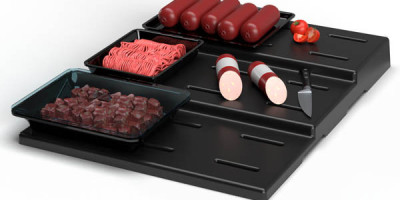
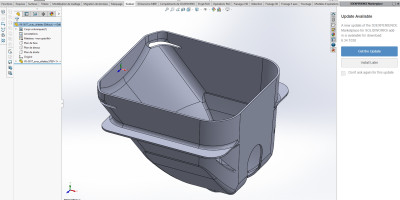
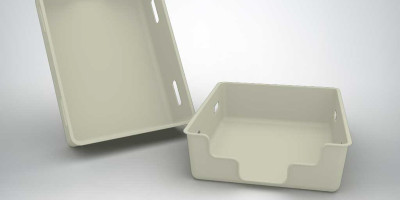
Plastic machining is a subtractive manufacturing method that consists of shaping a plastic part from raw material (sheet, block, bar) by removing material using cutting tools. Driven by computer numerical control (CNC), this process achieves levels of precision and repeatability that few other plastic transformation techniques can match.
In industry, plastic machining meets precise needs for prototyping, custom functional parts, small and medium series, or components with complex geometries for demanding applications. At Plastisart, plastic machining has been part of our plastic materials transformation expertise for many years. Our 3 and 5-axis machining centres allow us to produce parts with millimetre precision, reliably and repeatably on demand.
The main plastic machining techniques
CNC milling
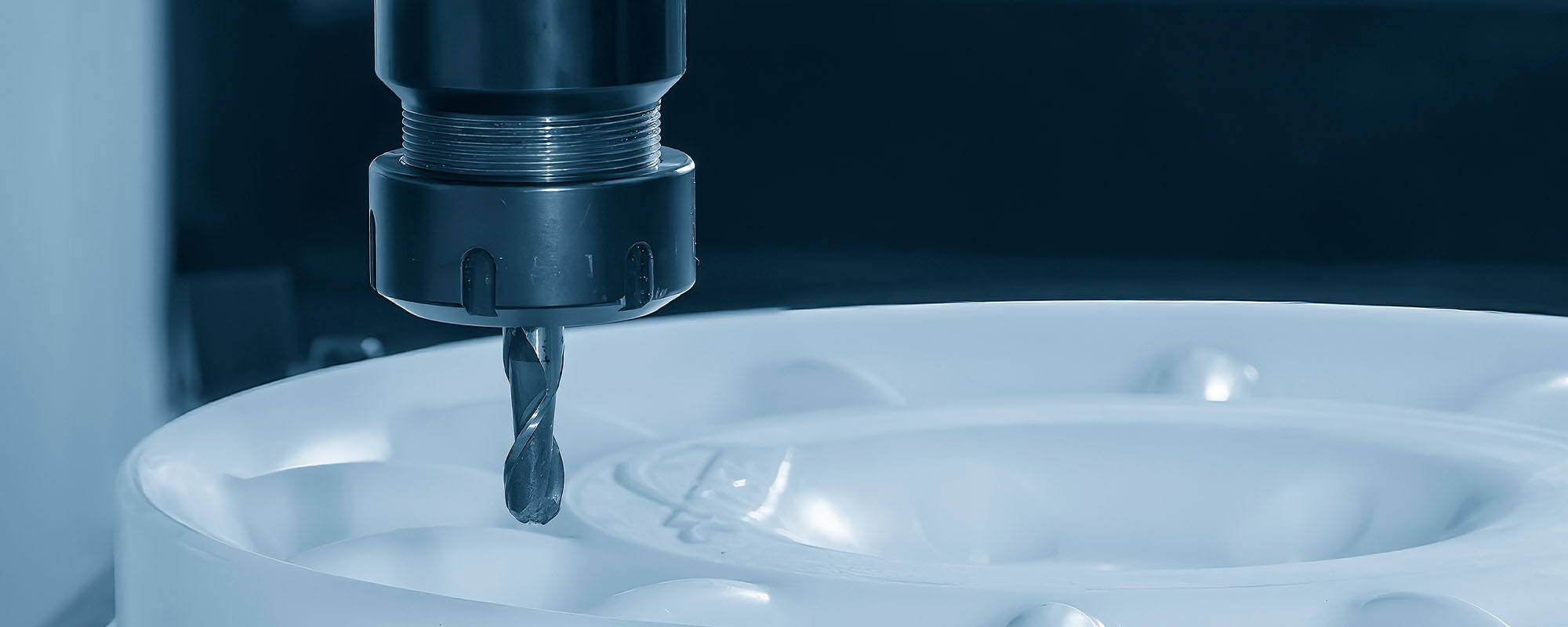
Milling is the most widely used machining technique for plastic materials. It consists of removing material using a rotating cutter that moves along several axes. 3-axis milling machines cover the vast majority of standard geometries. 5-axis machining centres allow complex-shaped parts to be machined in a single setup, improving overall precision and reducing production times. Plastisart has 3 and 5-axis machining centres dedicated to plastic materials, allowing both simple parts and components with more elaborate geometries to be processed.
CNC turning
Turning consists of rotating the part on a lathe while a cutting tool removes material. This technique is particularly suited to cylindrical or conical parts: rings, tubes, shafts, bushings, nozzles. Materials such as PVC, ABS, PA or HDPE are very well suited to turning.
Drilling and boring
Drilling allows precision holes to be made in plastic parts. The quality of drilling depends on the choice of drill bits, cutting speed and heat management. Boring then refines internal dimensions after drilling to achieve the required tolerances.
Cutting, profiling and finishing
Beyond the three main techniques, plastic machining includes complementary operations such as sawing, profiling, grooving, thread tapping or polishing. These finishing steps play an important role in the dimensional compliance and surface quality of delivered parts.
The different machinable plastic materials
CNC machining is compatible with a wide range of technical thermoplastics. Each material has specific properties that guide the choice according to the final application of the part.
PMMA (Plexiglass)
Transparent, scratch-resistant and excellent optical rendering. Generally used for portholes, protections, displays and visual parts.
ABS
Very good cost/performance ratio, correct impact resistance and easy to machine. Very widespread for prototyping and industrial housings.
POM (Delrin)
Excellent dimensional stability, low friction coefficient and easy to machine. Ideal for mechanical parts subject to friction (gears, slides and others).
PA (Nylon)
Good mechanical resistance, low friction and good impact and wear resistance. Primarily used for transmission parts and in aggressive industrial environments.
PEEK
High thermal performance (up to 260 °C), great chemical resistance and biocompatible. Reference material for applications in the medical and aerospace sectors.
PTFE (Teflon)
Excellent non-stick properties, very low friction coefficient and maximum chemical resistance. Used for seals, coatings and parts in contact with aggressive fluids.
HDPE (High-density PE)
Lightweight material, compatible with food contact, impact and corrosion resistant. Frequently used in food processing, handling and protective tanks.
PVC
Rigid or flexible depending on the formulation and a good compromise between chemical resistance and cost. Used in industrial plumbing, maintenance parts and machine protections.
PC (Polycarbonate)
High impact resistance, good transparency and significant rigidity. Frequently used for mechanical protections, safety glazing and technical housings.
Mastery of these materials is essential for achieving professional machining quality. At Plastisart, we work with these thermoplastics daily across varied ranges and thicknesses. This gives us extensive expertise with these materials and allows us to direct our clients towards the most suitable one for their needs and constraints.
Advantages of plastic machining for industrials
Precision and repeatability
CNC machining offers tight tolerances and perfect reproducibility from one part to the next. For industrials integrating plastic components into their production lines or assemblies, this is a guarantee of constant compliance.
No dedicated tooling
Unlike plastic injection which requires a mould (heavy investment, significant lead time), machining requires no specific tooling. The CNC programme is sufficient. This makes it the ideal solution for prototypes, small and medium series, or urgent replacement parts.
Design flexibility
CNC machining programmes can be modified quickly. A dimension revision, geometry change or functional adaptation does not require tooling redesign. This flexibility is a major asset for R&D teams and evolving projects.
Lead time control and express delivery
Production of a machined part can be launched as soon as the drawing or 3D file is received. At Plastisart, express delivery is part of our commitments: we understand that in industry, a part delay can impact an entire production line.
Cost optimisation for small and medium series
For low to medium production volumes, plastic machining is often more economical than injection. The absence of tooling costs and rapid start-up allow the unit cost to be reduced on this type of series.
The different industrial applications of plastic machining
Plastic machining is used across a wide variety of industrial sectors. In virtually all cases these are companies that manufacture products and need parts or sub-assemblies integrated into their finished products.
Industrial machinery and production equipment
Machine protections, slides, wear parts, casings and electronic component supports for demanding production environments.
Medical and pharmaceutical
Biocompatible components, cleanroom parts, diagnostic equipment and instrument supports. Dimensional precision and material traceability are essential requirements in these environments.
Transport and mobility
Vehicle interior parts and technical components for rail, automotive and special vehicles. Machining allows lightweight materials to be used that reduce the weight of certain equipment.
Food processing
Parts compatible with food contact (HDPE, POM, PA), conveyor slides, line guides and parts in contact with aggressive cleaning products.
Robotics and AGV
Precision parts for industrial robots, components for automatically guided vehicles and lightweight supports with complex geometry.
Defence and security
Technical parts with high precision and reliability requirements, embedded components in constrained environments.
Why choose Plastisart for plastic machining?
Our 3 and 5-axis CNC machining centres produce plastic parts with absolute precision, but our strength lies in our global approach. From design by our in-house design office through to complementary plastic transformation operations (thermoforming, welding, coating), Plastisart manages everything in-house.
For your prototypes as well as your series, centralising your production at Plastisart is the assurance of a single point of contact and controlled lead times.
FAQ
What dimensional tolerances can be achieved in plastic machining?
Thanks to our 3 and 5-axis CNC turning and milling centres, we achieve millimetre precision and very tight tolerances, in the order of a few hundredths of a millimetre. However, unlike metals, plastics are sensitive to temperature and humidity variations. Choosing a material with high dimensional stability (such as POM or PEEK) is therefore essential for high-precision parts.
How do you manage material heating during machining?
Plastic dissipates heat much less effectively than metal. Excessive heating can melt the polymer, deform the part or create internal stresses, especially in transparent materials such as PMMA or polycarbonate. Our technicians rigorously adapt cutting speeds and tool geometries, and use appropriate cooling to guarantee perfect, burr-free surfaces.
Do you carry out finishing or assembly operations after machining?
Yes, and that is what distinguishes us from a simple mechanical machining workshop. Plastisart is a global transformer. In the continuation of machining your parts, we can carry out in-house operations such as hot bending, welding and structural bonding, as well as applying technical coatings or markings (screen printing). You receive a complete sub-assembly, tested and ready for use.