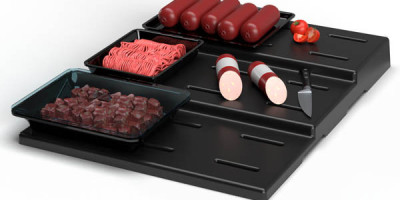
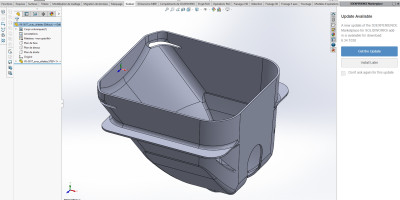
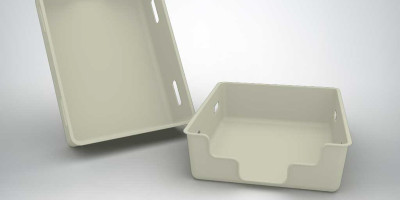
PEEK is considered the pinnacle of the polymer pyramid. This very high-technology thermoplastic is designed to excel where all other plastics fail. Capable of replacing steel or aluminium in the most hostile environments (extreme heat, aggressive chemistry, intensive sterilisation), it is the material of choice for the aerospace, medical and energy sectors.
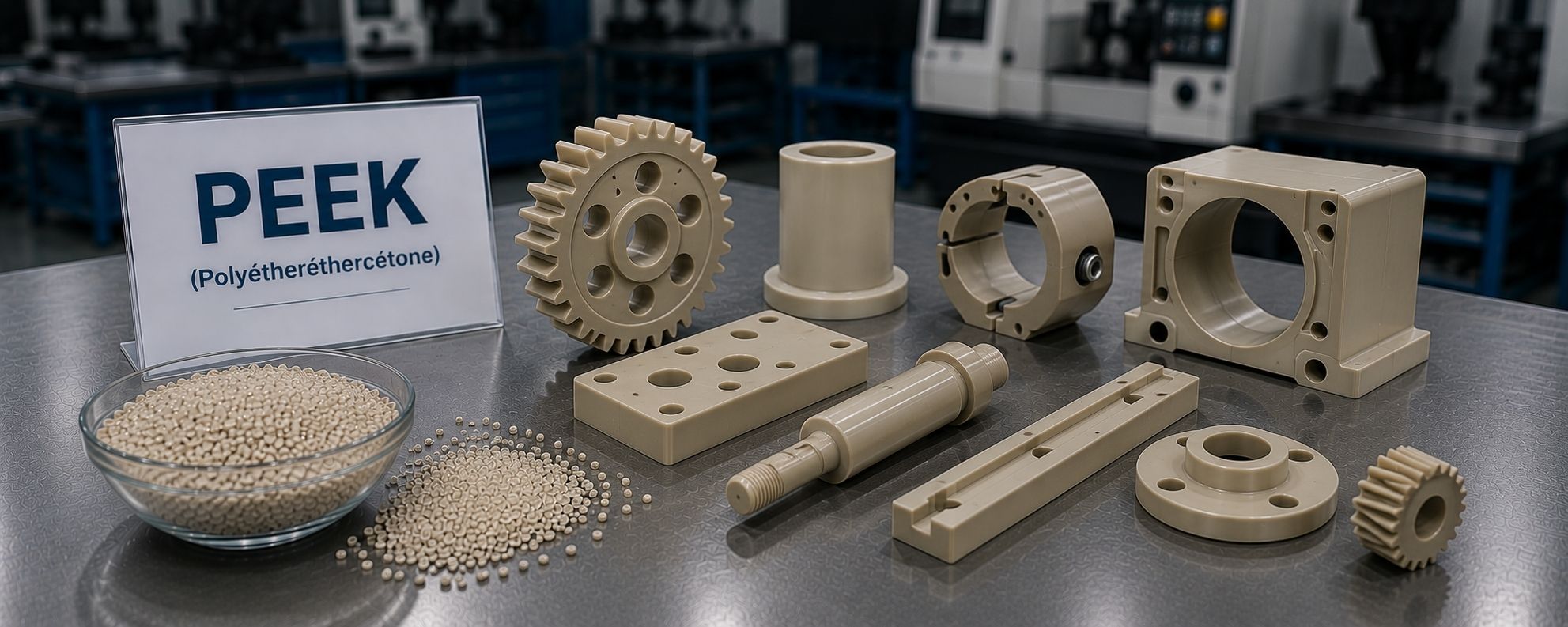
The pinnacle of thermoplastics
- Comprehensive support, from design to industrialization
- Detailed identification of your technical needs
- Advice on the choice of the most suitable technologies
What is PEEK plastic?
Polyetheretherketone (PEEK) is a semi-crystalline thermoplastic polymer from the PAEK family (Polyaryletherketones). Its extremely stable cyclic molecular structure gives it exceptional properties. It belongs to the very exclusive category of "high-performance thermoplastics". Due to its high production cost and processing complexity, it is a specialty material, reserved for critical applications where part failure is not an option.
The main properties and advantages of PEEK
PEEK is often the only possible choice when specifications combine severe thermal, mechanical and chemical constraints:
- Spectacular thermal resistance: this is its number one characteristic. PEEK retains its excellent mechanical properties at continuous operating temperatures up to 250 °C to 260 °C, and can withstand peaks beyond 300 °C.
- Chemical and hydrolytic inertness: it resists almost all organic solvents, oils, bases and acids, even at high temperatures. Furthermore, it offers excellent hydrolysis resistance (it can operate in pressurised steam without degrading).
- Superior mechanical properties: it combines very high tensile strength, excellent rigidity and exceptional fatigue and creep resistance (deformation under load).
- Fire behaviour: PEEK is intrinsically flame-retardant (certified UL94 V-0) without any additives and releases very little toxic smoke when exposed to flames.
- Biocompatibility: it is widely used in the medical field as it is non-toxic and withstands thousands of sterilisation cycles (autoclave, gamma rays, ethylene oxide).
The limitations of PEEK: which applications should it be avoided for?
Specifying PEEK requires rigorous analysis. Our design office will alert you to the following points to avoid over-engineering your project:
- Material cost: PEEK is one of the most expensive thermoplastics on the market. It should only be specified if its extreme performance is absolutely required. If your constraint is purely chemical at ambient temperature, we will direct you towards PTFE or HDPE to optimise your budget.
- Sensitivity to certain acids: although highly resistant, PEEK is attacked by concentrated sulphuric acid, concentrated nitric acid and certain halogens (such as pure chlorine or bromine).
- Demanding machining: its very high hardness and internal stresses require strict machining and annealing processes to avoid part distortion.
How does Plastisart process PEEK?
Due to its extremely high melting point (approximately 343 °C), PEEK cannot be thermoformed with standard equipment. At Plastisart, we process it by leveraging our precision engineering expertise:
- 3 and 5-axis CNC machining: this is the essential process for custom PEEK parts. We use very sharp carbide or diamond tools and meticulously manage spindle speeds to achieve perfect surface finishes and aerospace or medical tolerances.
- Heat treatment (annealing): during complex PEEK machining, the material can release internal stresses. Our workshops master annealing cycles (stepped oven heating) before or during machining to guarantee absolute dimensional stability of the finished part.
- Engraving and traceability: PEEK responds very well to laser marking. For the medical or defence sector, we can engrave unalterable Datamatrix codes or batch numbers directly into the material.
Industry sectors and typical industrial applications
PEEK is the ideal substitute for metals (steel, titanium, bronze) when a structure needs to be lightened while maintaining extreme reliability:
- Cabin components, fasteners, cable supports and engine parts in aerospace (drastic weight reduction compared to aluminium)
- Surgical instruments, dialysis components, sterilisation trays and implantable medical device parts (radiotransparent)
- Sealing rings, valve seats and downhole connectors subject to high pressure and high temperature (HPHT)
- Wafer carriers, thermal and electrical insulators for semiconductors
Industrial sector
Sealing rings, high-performance valves and precision parts in PEEK for industrial environments at high temperature and with aggressive chemistry.
Medical & pharmaceutical sector
Surgical instruments, dialysis components, sterilisation trays and implantable medical device parts in radiotransparent PEEK.
Aerospace & defence sector
Cabin components, fasteners, cable supports and lightweight structural parts fire/smoke certified for aerospace and defence applications.
Transport & mobility sector
Aluminium-replacement parts for alternative-drive vehicles and high-performance transmission systems.
Food processing sector
Precision parts in PEEK for sterilisation and packaging equipment subject to intensive steam cleaning cycles.
Communication & events sector
Insulating components and lightweight structural parts in PEEK for embedded electronic equipment in harsh environments.
Cosmetics sector
Precision parts in PEEK for formulation and packaging equipment requiring chemical resistance and sterilisability.
Office sector
Thermal and electrical insulators, component carriers in PEEK for high-performance electronic equipment.
Building & construction sector
Sealing parts and insulating components in PEEK for technical equipment exposed to extreme thermal and chemical conditions.
Energy & environment sector
Sealing rings, valve seats and downhole connectors in PEEK for Oil & Gas applications at high pressure and high temperature (HPHT).
Sports & leisure sector
Lightweight and ultra-resistant parts in PEEK for high-performance sports equipment subject to extreme mechanical stresses.
Why choose Plastisart for your PEEK parts?
Machining PEEK is a significant investment for an industrial. The margin for error is zero, as the slightest material scrap is very costly. By entrusting your project to Plastisart, you rely on a design office that verifies the accuracy of your drawings and on CNC operators experienced in managing high-performance polymers. We master the heating cycles, specific tooling and strict quality control required by critical parts.
FAQ about PEEK plastic
What is the difference between PEEK and PTFE (Teflon)?
Both plastics resist chemicals and high temperatures (250 °C+). The major difference lies in mechanics: PTFE is a very soft material that deforms easily under pressure (creep) and wears quickly. Conversely, PEEK is extremely hard, rigid and resistant to mechanical wear. PEEK is a structural part, PTFE is a sliding or sealing part.
Why replace metal parts (aluminium or stainless steel) with PEEK?
PEEK offers strength comparable to certain metal alloys while being up to 70% lighter. Furthermore, it does not rust, does not oxidise, acts as a natural thermal and electrical insulator, and does not interfere with magnetic fields (a major advantage for medical imaging equipment such as MRI scanners).
Are there "filled" PEEK variants?
Yes, to push its limits even further, PEEK is often modified at the factory. You can find carbon fibre-filled PEEK (PEEK-CF) for extreme rigidity, glass fibre-filled PEEK (PEEK-GF) for better thermal insulation, and PTFE and graphite-filled PEEK (Bearing grade) to create bearings and gears with unbeatable wear and sliding properties.