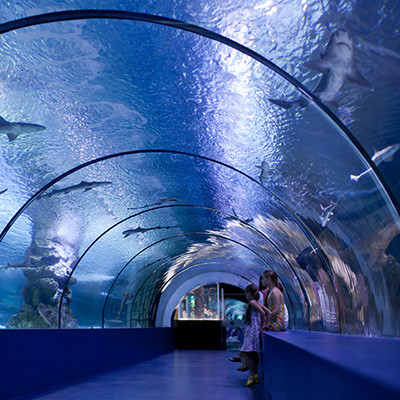
Blow moulding and draping of plastic are processing techniques that enable the creation of curved, concave and convex parts.

Known for many years for its cutting-edge expertise in thermoforming and other plastic processing techniques, Plastisart offers you over 50 years of experience in the manufacture of plastic parts and components in Belgium and France.
Blow moulding and draping of plastic are processing techniques that enable the creation of curved, concave and convex parts.
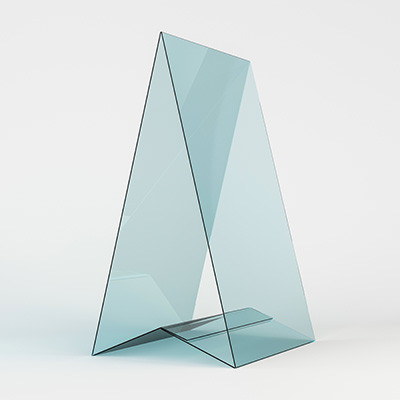
Hot forming of plastic offers exceptional flexibility for creating curved or bent plastic parts with unrivalled precision.
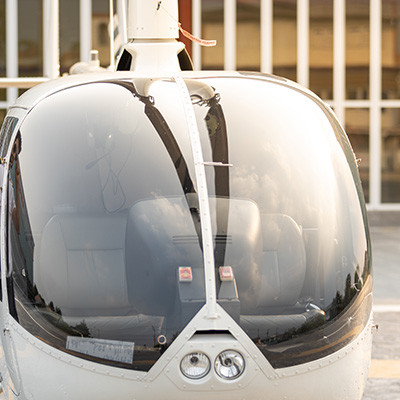
Contactless blow thermoforming offers exceptional optical clarity without distortion, meeting the most stringent industry standards.
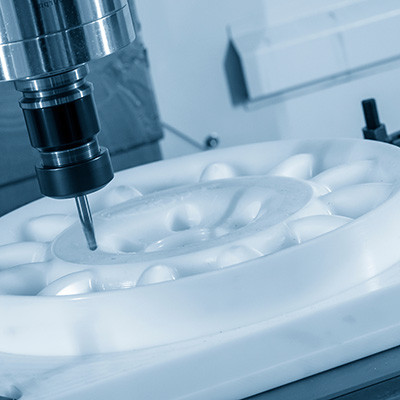
With unlimited versatility and express delivery, we offer superior quality tailored to various industrial sectors.
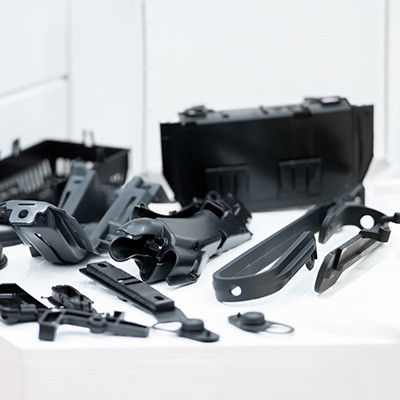
RIM injection offers an economical alternative for the production of large plastic parts and technical components.
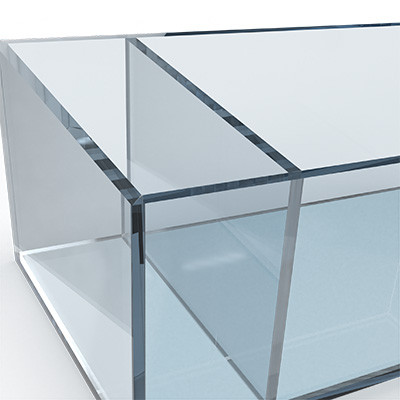
Plastisart excels in bonding Plexiglass for a variety of applications, offering optimal optical quality and exceptional strength.
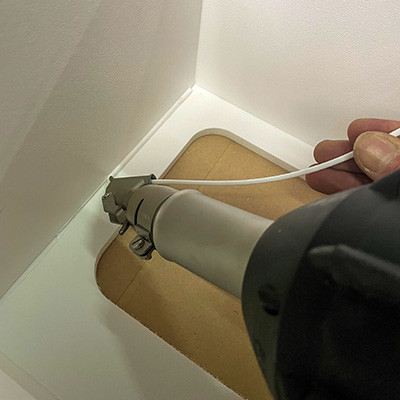
Hot air plastic welding: Precise, durable and versatile assembly.
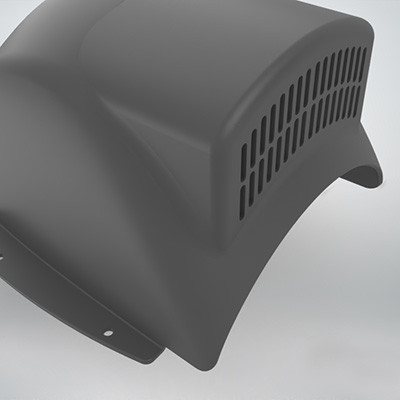
Plastic thermoforming is a historic process at Plastisart. For over 50 years, we have been designing and manufacturing thermoformed parts for industrials who need precise, repeatable plastic components delivered within controlled lead times, whether for a few parts or larger quantities.
This long experience, accumulated over thousands of projects in sectors as varied as industrial machinery, medical, transport and food processing, has allowed us to develop a refined mastery of thermoforming and an in-depth knowledge of material behaviour according to forming temperatures, tooling design, and the ability to combine thermoforming and CNC machining on the same part to achieve levels of precision that thermoforming alone does not always allow.
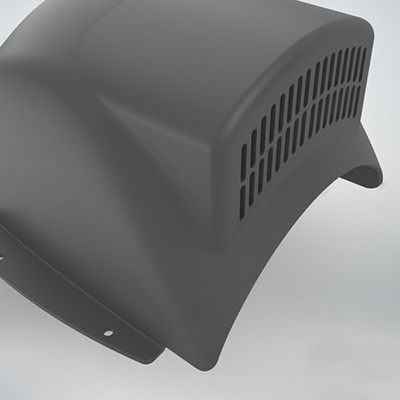
Vacuum thermoforming consists of heating a thermoplastic sheet or plate to its softening temperature, then creating a depression between the sheet and the mould. This suction presses the material against the surface of the tooling with precision and uniformity. Once cooled, the part retains the shape of the mould and can be demoulded, trimmed and machined according to the specifications of the brief.
The depression plays a key role in the quality of the final result. It ensures homogeneous contact between the material and the mould across the entire surface and guarantees compliance with dimensions, details and curves. This avoids zones with irregular thicknesses that can appear with other shaping processes.
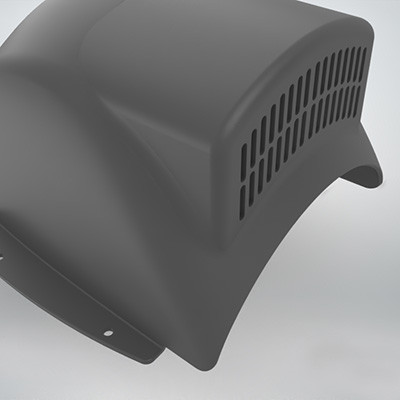
Plastic fabrication and sheet plastic working refer to all the transformation techniques that allow parts, structures and components to be manufactured from thermoplastic sheets, tubes and profiles, through cutting, bending, bending, welding and bonding. These processes apply without investment in moulding tooling, which makes them accessible from the very first part and particularly suited to small runs, made-to-drawing parts and projects requiring great design flexibility.
At Plastisart, plastic fabrication and sheet plastic working are complementary disciplines to our other transformation processes. They broaden our ability to respond to varied industrial projects, particularly for technical structures, cladding, tanks, protective equipment and casing that do not require the tolerances or complex three-dimensional geometries found in thermoforming or injection.
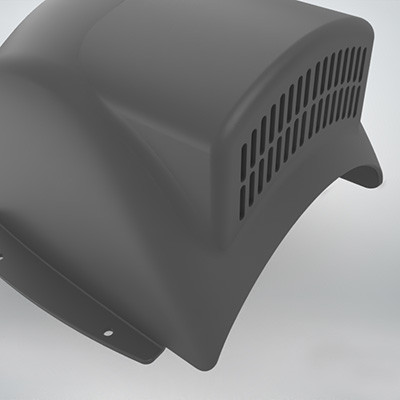
Not all plastic parts are necessarily flat or angular. Examples include curved cabin glazing, special vehicle windscreens, curved machine casings or certain industrial equipment protections. These components require curved, concave or convex shapes that are not possible with other techniques.
At Plastisart, these processes are part of the transformation techniques we have mastered for many years. They allow custom curved parts to be produced from standard thermoplastic sheets, with or without moulding tooling depending on the complexity.
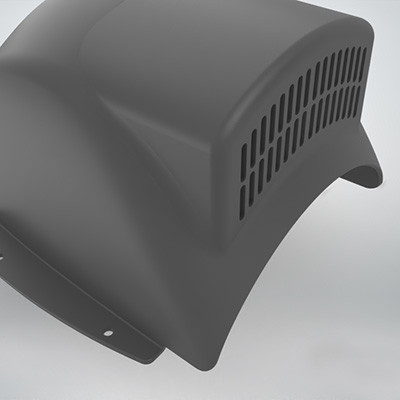
Hot bending and hot forming are two thermoplastic transformation techniques that allow sharp angles, right-angle structures and complex angular shapes to be created from standard sheets, without investment in moulding tooling. Complementary to bending and draping for curves, these processes are the natural answer whenever a plastic part must present defined angles, assembled flat faces or a polygonal geometry.
At Plastisart, hot bending and hot forming have been part of our transformation service offering since our foundation. They allow us to respond quickly to projects involving housings, angular covers, ducts, tanks and protective structures that combine several flat faces with precise angles.
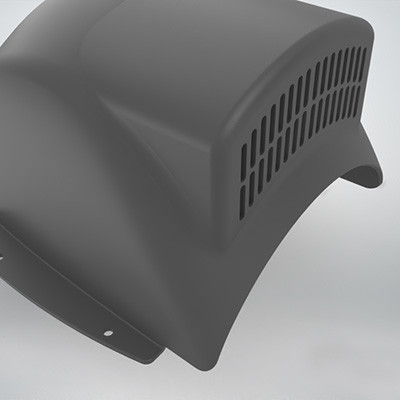
Plastic blow moulding encompasses two distinct techniques that share the same fundamental principle: shaping a thermoplastic by air injection. Nevertheless, they apply to very different part families. At Plastisart, we have mastered both processes for many years and can therefore respond to a wide variety of requests.
Extrusion blow moulding is the reference process for manufacturing industrial hollow bodies: tanks, canisters, ducts, bellows, technical containers. Contact-free blow moulding is a more specialised technique, particularly used for manufacturing parts with high optical quality such as domes, bubbles and canopies, where the absence of contact with tooling is the prerequisite for preserving the transparency and surface homogeneity of the part.
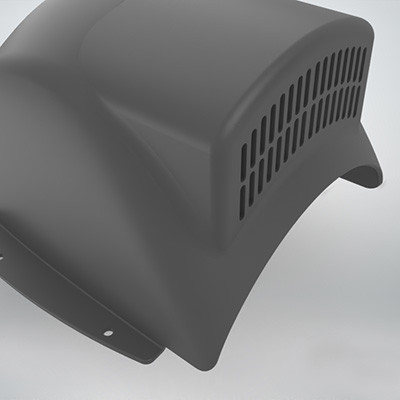
RIM injection moulding (Reaction Injection Molding) is a process little known to the general public but particularly interesting for industrials who need to produce large parts in small and medium series, without bearing the excessive tooling costs of classical thermoplastic injection.
At Plastisart, we have mastered this process for many years. It therefore forms part of our range of plastic transformation services and allows us to respond to requests where other techniques such as thermoforming are not optimal. For example, we use RIM injection for bulky parts with complex geometries, machine covers with precise contours or components with mechanical properties close to large-series injection, but produced in smaller volumes.
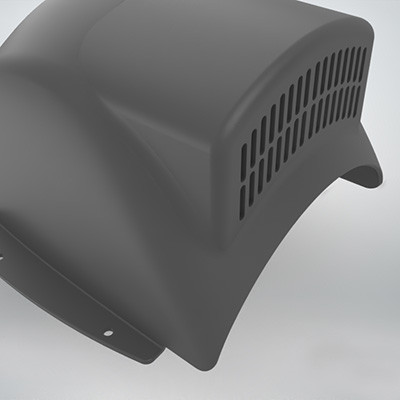
Plastic machining is a subtractive manufacturing method that consists of shaping a plastic part from raw material (sheet, block, bar) by removing material using cutting tools. Driven by computer numerical control (CNC), this process achieves levels of precision and repeatability that few other plastic transformation techniques can match.
In industry, plastic machining meets precise needs for prototyping, custom functional parts, small and medium series, or components with complex geometries for demanding applications. At Plastisart, plastic machining has been part of our plastic materials transformation expertise for many years. Our 3 and 5-axis machining centres allow us to produce parts with millimetre precision, reliably and repeatably on demand.
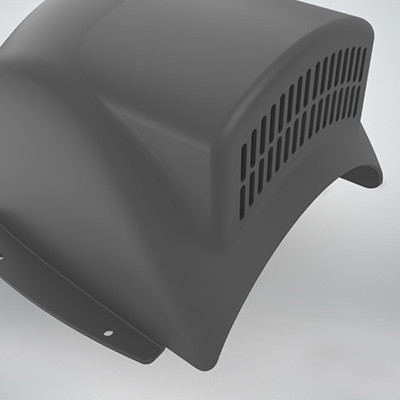
Laser cutting and laser engraving are contact-free transformation processes that allow thermoplastics to be worked with a level of precision and fineness that mechanical processes cannot always achieve. The laser opens up possibilities that machining does not allow: complex contours, fine details, permanent marking on hard surfaces or cutting of already-formed parts.
At Plastisart, laser cutting and engraving integrate into our offering of main transformation processes such as thermoforming, plastic fabrication and CNC machining. After the manufacturing stages, the laser can intervene to refine contours, create complex internal cuts or apply permanent marking without altering the material structure.
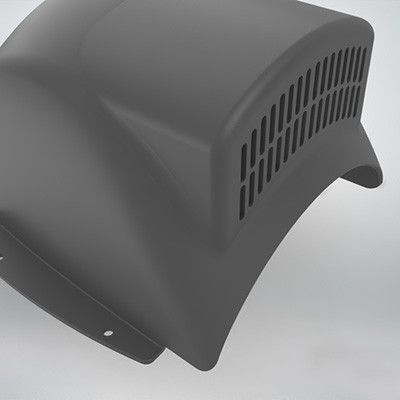
A plastic part is rarely delivered alone. It generally integrates into a sub-assembly, assembles with other components, forms a housing, a structure or a system. The quality of a plastic assembly is as decisive as the quality of the part itself: a fragile weld joint or a poorly prepared bond compromises the whole, regardless of the quality of the individual components.
At Plastisart, plastic welding and structural bonding are techniques we have mastered for decades. We use them daily in our production of parts and sub-assemblies. We also offer them as standalone services for industrials who need plastic components assembled with an industrial level of quality and traceability.
From thermoforming, bending, drape forming and blow moulding to finishing coatings and 3- and 5-axis machining, we offer you the optimal solution tailored to your situation and budget.
Plastisart also has expertise in bonding Plexiglas and plastic welding, guaranteeing customised plastic solutions of the highest quality. Whatever your project, Plastisart offers you the solution that precisely meets your needs in terms of both functionality and performance.
Plastisart is at your disposal to study your projects and offer you solutions tailored to your specific needs. Contact us now via our online form or by phone to find out more about our services.
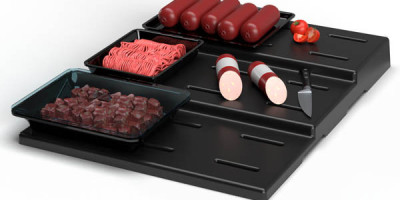
Plastisart specialises in the design and manufacture of plastic parts and assemblies for the indu...
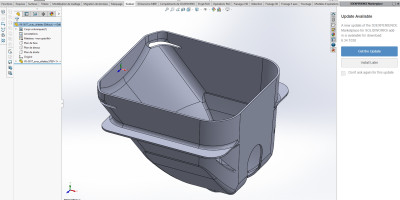
Before touching any material, we design. Every project that comes into Plastisart goes through a ...
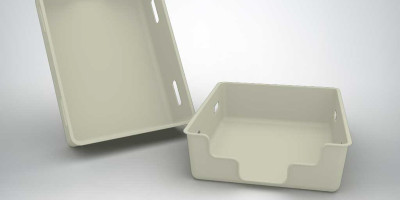
In the world of plastic processing, plastic sheet metalworking holds a special place. Less well-k...
Technical mastery
Integrated design office
Complete service from design to completion
Small and large series
Custom manufacturing